Beyond the Stand: What the Giftware Industry Has Learned About Making Trade Shows Work Commercially
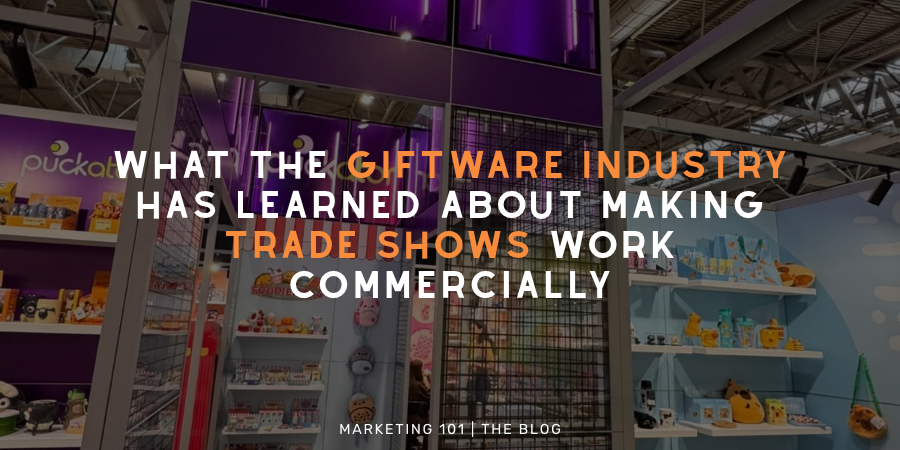
Insights from exhibitors, retailers, trade show organisers and industry specialists
For most giftware businesses, a major trade show represents one of the biggest individual sales and marketing investments of the year. Months can go into new ranges, samples, stand design, catalogues, travel, staffing and the many other decisions that need to be made before the doors open.
It is very easy for the show itself to become the strategy.
Once everyone arrives, attention understandably turns to what is happening immediately in front of them. Is the stand busy? Which products are attracting attention? Who has stopped to talk? Are buyers placing orders?
All of that is useful to know, but it gives a fairly narrow view of what the investment may eventually produce.
A buyer could already have encountered the business through trade media, LinkedIn, an email or a conversation with somebody in sales. They stop because a collection catches their attention, look at the website later, request samples the following week and eventually place an order. Another buyer may have been identified as an important account months earlier. Somebody else might notice the brand without speaking to anyone and make contact much later.
The commercial journey rarely begins and ends on the exhibition floor. That matters more now because buyers no longer need trade shows simply to gain access to products. They can research brands online, view ranges in detail and place orders without leaving the office. Physical events therefore have to earn their place through something more valuable: discovery, inspiration, buyer confidence, relationships and a concentrated understanding of what is happening in the market.
Demi Pendakis, Founder of F.Y.G, describes the stand as “the shop window, not the strategy”. His own approach has developed around three connected stages: the work before the show, what happens while it is open and the commercial activity afterwards.
Ailsa Cunningham, Business Development Director at The English Soap Company, independently describes almost exactly the same lifecycle. There is a before, during and after to the event, and concentrating too much resource on the few days in the middle leaves part of the commercial opportunity unsupported.
From the organiser side, Jackson Szabo, Portfolio Director at Hyve, describes trade shows as a marketing funnel rather than simply a sales funnel. The event has to sit within a much broader programme of activity rather than becoming several intense days surrounded by relative silence.
Gemma Sault, Managing Director of Home & Gift Association, puts the relationship element at the centre of it:
“Trade shows are not necessarily just sales events, they’re relationship events.”
Therese Oertenblad, Founder of Small Business Collaborative, questions what makes a physical show worth attending when access to products itself is no longer scarce. Her emphasis is increasingly on discovery, inspiration and the human experience of being there.
Ted Smith, Creative Director at Puckator, approaches the issue through buyer confidence. Visitors arrive with limited time and enormous choice, so the stand needs to help them make sense of the business rather than overwhelm them with everything it sells.
His conclusion captures much of what we heard:
“Clarity consistently outperforms complexity.”
The buyer perspective has added another important layer.
Sara Allbright, Director and co-founder of Retail100 Consulting and formerly responsible for Gift and Home Fragrance buying at John Lewis, explains that genuine buyer interest does not always mean the retailer is in a position to place an order. A category may already be overstocked. The retailer might operate a one-in, one-out policy for suppliers or SKUs. The buyer can like the range, believe it has potential and still have nowhere to put it at that moment.
That can result in a much longer commercial journey than an exhibitor expects. The interaction on the stand still matters because the brand needs to be memorable enough for the buyer to return when the opportunity eventually opens.
This research grew partly from our own experience at Marketing 101. In our work with giftware and wholesale businesses, we regularly see exhibition planning happening separately from account development, sales priorities and the wider marketing calendar. Considerable effort goes into the stand itself, while some of the activity that could increase its commercial value is dealt with much later.
That disconnect was one reason we wanted to test our own thinking with people approaching exhibitions from different positions.
The contributors are Gemma Sault, Managing Director of Home & Gift Association; Therese Oertenblad, Founder of Small Business Collaborative; Meg Hawkins, Founder of MEG HAWKINS Ltd; Sanjay Aggarwal, Chief Spice Officer at Spice Kitchen; Sarah Ward, Executive Director of The Gift & Lifestyle Consortium, part of the Bira Group; Jackson Szabo, Portfolio Director at Hyve; Demi Pendakis, Founder of F.Y.G; Vanessa Curry, Managing Director of Best Kept Secrets; Ted Smith, Creative Director at Puckator; Ailsa Cunningham, Business Development Director at The English Soap Company; and Sara Allbright, Director and co-founder of Retail100 Consulting.
Between them they bring experience of buying for major retailers, working closely with independents, organising shows, exhibiting over many years, advising brands entering wholesale and developing substantial product businesses.
This is qualitative research rather than a statistically representative industry study. Its value lies in where experienced people independently reach similar conclusions, where their experiences differ and where those conversations have forced us to reconsider our own assumptions.
Several assumptions have changed -
We initially gave more weight to the idea of buyers arriving at a show with a defined piece of shelf space to fill. The conversations suggest a more varied picture. Planned ranging certainly exists, particularly within larger retailers, but discovery remains an important reason for attending.
We expected digital readiness to become increasingly important and it clearly has, although Meg Hawkins’ experience is a useful reminder that physical brochures can still have considerable value at a physical event.
We originally considered six months a reasonable outer point for assessing exhibition ROI. The contributors have given us examples of commercial relationships taking considerably longer.
Our definition of retail readiness has expanded too. We began largely with the commercial information and operational capability needed to secure the first order. The buyer evidence has moved that much further. Winning the account is one challenge. Remaining a useful and reliable supplier requires stock management, logistics, marketing support, store execution, product development and the ability to meet the retailer’s ongoing requirements.
Across all of the interviews, several themes have remained remarkably consistent. The commercial work begins before the event. Buyers are assessing the supplier as well as the product. Clarity in the range and proposition matters. Follow-up has a major influence on what eventually happens. And the commercial life of a trade-show relationship can extend far beyond the final afternoon.
A show can create an immediate order, but it can also move an important account forward, deepen an existing relationship, expose a weakness in the proposition or generate intelligence that changes what the business does next.
Demi describes that broader result as commercial momentum. That has become a useful way of thinking about the question at the heart of this paper.
1. Give the show a commercial job
“Generate leads” sounds like an objective, but it rarely gives the business enough to make useful decisions.
A growing brand might be looking for its first group of independent stockists. Another business may already have strong independent distribution and want to develop garden centres or visitor attractions. An established wholesaler could be introducing a new category to existing customers. Elsewhere, progress with a relatively small number of national accounts might have a material impact on the year.
Those businesses could all exhibit at the same event and require very different plans.
If independents are the priority, opening order value, pricing and ease of replenishment may deserve particular attention. A business targeting a small number of larger accounts takes a considerable risk if it relies entirely on those buyers walking down the right aisle. A company testing a new category might learn more from ten detailed buyer conversations than another exhibitor gains from several hundred visitors.
Jackson sees unclear objectives as one reason shows become difficult to evaluate afterwards. If the event is judged predominantly as a short-term sales channel, anything that does not convert immediately can look unsuccessful. His preferred question is what role the exhibition plays within the wider marketing strategy.
Demi has reached a similar position through exhibiting. He looks at new accounts, important buyers, realistic pipeline, development within existing customers and what the team learned about the market alongside the orders written.
At Best Kept Secrets, Vanessa Curry also takes a broader view. Orders remain part of the calculation, alongside the quality of the opportunities created, relationships strengthened and new buyers reached.
Sara Allbright’s buyer experience helps explain why some seemingly strong opportunities can take time. A retailer may be interested but already overstocked, committed to existing suppliers or simply between appropriate ranging windows. That changes what meaningful progress might look like. The immediate objective with a major account may be to establish genuine fit, understand what would need to happen next and earn the right to continue the conversation.
There are practical considerations too. Asked what she wished she had appreciated much earlier about exhibitions, Ailsa’s answer is wonderfully straightforward:
“Location, location... location!”
Hall position, visitor flow, neighbouring exhibitors and proximity to relevant categories all affect the opportunity the stand receives. Location deserves to be part of the commercial assessment before the event begins.
The show itself should therefore be interrogated rather than selected through habit.
Jackson recommends looking beyond headline visitor numbers and asking for evidence about the health of the audience. One measure he watches is returning exhibitor rate, with more than 75% representing a strong signal in his experience. Visitor dwell time can also tell an exhibitor something about how people are using the event. These are Jackson’s working benchmarks rather than universal industry standards, but they demonstrate the sort of information exhibitors can request.
There is another form of due diligence when particular retailers are being targeted.
Sara’s advice is to know them properly. Which competing brands do they already stock? What price points exist within the category? How is the range presented in store and online? Where is the genuine gap?
Wanting to be stocked by a retailer is not evidence that the retailer has a reason to stock you.
That sounds obvious, but it is one of the areas where ambition can outrun analysis. A famous account is attractive because of its name and scale, yet the product may sit awkwardly alongside the existing offer or the business may not yet be operationally ready to support it.
There are also occasions when the correct commercial decision is not to exhibit.
If the audience no longer reflects the customers the business needs, strategically important opportunities repeatedly fail to progress, the available location is poor, the organiser cannot demonstrate how the event is developing or the budget could work significantly harder elsewhere, automatic rebooking makes little sense.
Trade shows can be enormously valuable. They still need to earn the investment.
2. Buyers are assessing more than the product
Giftware is visual, so the product still has to earn somebody’s attention. The buyer’s assessment quickly moves beyond it.
Sarah Ward’s perspective through The Gift & Lifestyle Consortium reflects regular conversations with independent retailers. Product appeal is clearly important, alongside confidence that the supplier can deliver reliably, communicate well and provide straightforward commercial information. Margins, minimum orders, stock availability and lead times all become part of the decision.
Sara Allbright saw the same principle at a different scale while buying for John Lewis. Once an unfamiliar brand had caught her attention, she needed confidence that the supplier could realistically manage the demands of a large retailer. Supply chains, logistics and internal retailer requirements can be challenging, particularly for a smaller business entering that environment for the first time.
Exclusivity and channel management can also influence a larger retailer’s thinking. Sara would often look for a level of UK exclusivity, although she recognises the tension that creates for a brand attending a trade show partly to broaden its distribution. Her advice is to think carefully about which parts of the range are offered through which channels, rather than assuming the same proposition belongs everywhere.
That raises a more strategic question around customer fit.
Ailsa describes the underlying challenge as removing barriers to purchase. Looking back at The English Soap Company’s move into retail, she feels they underestimated how much mattered beyond having a product the retailer liked. Customer service, responsiveness and practical retail solutions all became part of being easy to deal with.
Ted talks about the same issue through buyer confidence. Product information can often be researched before the meeting. The face-to-face encounter helps the buyer assess the business behind it.
Sanjay Aggarwal learned that lesson early at Spice Kitchen. The original tins did not present the product in a way retailers could easily sell and the business itself had been guessing its margins. Packaging needed work, but the commercial foundations did too.
His thinking now begins more with the retailer. A starter order can remove some of the uncertainty around what to select. Point-of-sale support helps the product work harder when nobody from Spice Kitchen is standing beside it. In some situations the business uses sale or return to reduce risk for an independent retailer.
Meg Hawkins approaches supplier confidence through honesty. Her advice is to understand the products, prices and MOQs properly, while being equally clear about what the business can and cannot deliver. A promise made to secure an exciting opportunity can cause much greater damage if the supplier subsequently fails to fulfil it.
Sara’s comments about risk make that tangible.
A smaller supplier that was previously stocked by another retailer and then disappeared may prompt questions about why that relationship ended. If the product was strong, poor account management becomes one possible explanation.
Basic commercial questions matter too. A business unable to answer something as fundamental as how its barcoding works may create doubts about what else has not been properly prepared.
There is also such a thing as being too early for a particular retailer. Sometimes waiting until the business has the infrastructure, experience and resource to support the opportunity is the better commercial decision.
The buyer is therefore assessing potential and risk at the same time.
3. More products do not automatically make a stronger range
There is an understandable temptation to use a trade show to demonstrate everything the business can do. The stand has been paid for, products exist and new launches need attention. A large display can also feel like evidence of scale.
For a buyer moving through hundreds of exhibitors, it can make the proposition much harder to read.
Demi describes the answer as hierarchy. F.Y.G has several collections and a broad fragrance offer, so buyers need help understanding what is new, which products are already proven, where the easiest entry point sits and what a sensible opening assortment might look like.
Best Kept Secrets faces a similar challenge because of the breadth of its ranges. Vanessa wants buyers to identify newness, bestsellers, strong gifting opportunities and the products most relevant to their own customers without having to decode everything on the stand.
Ted’s thinking at Puckator has moved away from asking how more products can be shown and towards making the range easier to buy.
For established wholesalers, this is particularly important because product portfolios accumulate an internal logic over time. Teams inside the business understand that structure instinctively. Buyers encounter it with fresh eyes.
Clear categories, product stories, signposting and navigation therefore have a commercial purpose. They reduce the work a buyer has to do before identifying the part of the offer that matters to them.
Ailsa gives a practical example through The English Soap Company. Instead of asking retailers to select isolated SKUs from a large range, the business increasingly sells collections through counter display units, free-standing units and prepacks containing complementary bestsellers. A retailer can buy into a thought-through starting point rather than assemble one from scratch.
Ted describes the principle particularly well:
“In many cases, removing complexity creates more value than adding information.”
Sarah Ward’s retailer-facing perspective arrives at a similar conclusion. A coherent collection helps an independent understand who the range is for, why it is commercially interesting and how it might work alongside the existing offer.
For a larger retailer, Sara Allbright says range breadth may become important in another way. The supplier needs enough critical mass to justify bringing the brand into the store. During her time at John Lewis, home fragrance brands generally needed at least six fragrances to create a credible offer.
That specific number belongs to that retailer and category, but the wider lesson travels well.
Understand how the target retailer actually presents the category. What fixtures are used? How much breadth does the customer expect? How will the collection sit alongside competing brands?
The supplier should have thought about that before expecting the buyer to do the work.
Meg adds the role of brand recognition and storytelling. MEG HAWKINS has developed beyond a collection of products based on her artwork, with a wider identity helping the buyer understand how the individual lines relate to one another.
The physical environment matters too. Meg places considerable importance on lighting and on making the stand comfortable to enter. Therese sees useful lessons in modern retail environments where theatre and experience are used to encourage people to stay and explore.
Ted frames that as customer experience. Physical scale alone does not produce clarity.
Ailsa also cautions against making the interaction itself intrusive. Few things are more off-putting to her than an exhibitor stepping into the walkway to stop buyers and push a product demonstration. A strong stand should give people enough reason to enter voluntarily.
4. Retail-ready means being ready for what happens after yes
A new range can be beautifully developed and still be surprisingly difficult to buy. Pricing, barcodes, dimensions, pack quantities, descriptions, imagery, stock information and compliance documents may sit across different people and systems. They all become visible once interest turns serious.
Sarah Ward says independent retailers expect the core commercial information to be available without unnecessary effort. Wholesale pricing, RRPs, minimum order values, availability and delivery arrangements need to be clear.
Sara Allbright pushes the definition of retail readiness much further. For a significant retail account, all parts of the business need to be able to support the relationship. Stock has to remain available. Logistics need to work consistently. Marketing must create enough profile for the products to sell. Stores may need visiting to check presentation. A pipeline of new product keeps the offer relevant, and legal or labelling requirements have to be properly understood.
For a small business with limited headcount, that can become a considerable workload. Sara describes the distinction particularly clearly: getting a product into a retailer is hard, but keeping it there is where the real work begins.
That changes what we mean by retail-ready. The useful question is no longer only whether the supplier can take the first order. It is also whether the organisation can support the account it is trying to win.
Ailsa’s experience reinforces that through practical retail support. Display solutions and curated collections help the retailer translate the range into the store rather than leaving them to solve everything after purchase.
Sanjay asks the same question from the product side: what continues selling when nobody from the supplier is there? Packaging, POS, the opening assortment and the reorder journey all have a role.
One test before the next exhibition is therefore worth making deliberately difficult:
If this retailer said yes today, could we still service the relationship properly six months later?
That means looking at stock, operations, customer service, marketing support and the internal resource required by the account rather than simply celebrating the purchase order.
5. Do not leave the right buyers to chance
Trade shows are valuable partly because they create unexpected discovery. Relevant people are concentrated in the same place and conversations happen that would be difficult to engineer elsewhere.
The accounts that matter most deserve more deliberate preparation.
Sanjay stopped relying on the right retailers simply appearing at Spice Kitchen’s stand. The team now contacts buyers beforehand and tries to get some of the conversations it most wants into the diary.
Demi takes a similarly targeted approach at F.Y.G, using existing relationships, agents, email, social activity, trade media and the organiser to build opportunities before the event.
At Best Kept Secrets, Vanessa treats the exhibition as part of the wider marketing campaign. Existing customers and prospects hear about key ranges and new launches through email, print, digital advertising and social activity before the doors open.
Ailsa does the same at The English Soap Company, warming customers and prospects beforehand so they know where the business will be and what it plans to showcase.
Gemma Sault sees that pre-show work as one of the clearest differences between exhibitors that make strong use of an event and those that leave too much to the stand itself. Inviting existing customers, arranging meetings with priority buyers, promoting attendance and giving people a specific reason to visit can have as much influence on the eventual return as another piece of stand furniture.
The quality of that outreach matters too.
Demi makes a useful distinction between “Come and see us at the show” and approaching a retailer because there is something being launched that could genuinely work for their stores. The latter already begins the commercial conversation.
Sara Allbright raises the bar further for strategic accounts. If a particular retailer matters, research them properly before making contact. Understand the existing category, competing brands, price architecture and where the proposed range could genuinely add something.
This is one of the recurring gaps we see in our own work at Marketing 101. Sales teams may have a very clear list of commercially attractive accounts while the exhibition marketing is still aimed at a broad, undifferentiated audience. When those priorities are shared early enough, PR, content, direct outreach and sales activity can all support the same objective.
There is another side to target-account planning as well.
The retailer has to be attractive to the supplier, but the supplier needs a credible reason to matter to that retailer.
Prestige alone is not a targeting strategy.
The organiser can also contribute before the event. Jackson believes exhibitors often underuse the promotional support, communications and other marketing infrastructure available through the organiser. Sponsorship or additional visibility may occasionally create more commercial value than simply purchasing more floor space.
The strongest exhibition plans therefore begin well before the stand is occupied.
6. The conversation is the opportunity
Once a buyer stops, the natural temptation is to start explaining everything. The founder story, company history, complete product range and future plans can all suddenly feel important.
Sanjay has learned to begin with the retailer. What sort of shop do they have? What already works? Are they looking for a particular category or price point? The answers determine what he shows them.
Meg’s advice introduces a useful balance. Buyers also need enough space to look, absorb the products and decide what interests them. Being engaged does not require making every visitor feel they have triggered a sales presentation.
Ailsa is similarly wary of exhibitors moving into the aisle to interrupt passers-by and force a product demonstration. Her preference is for the stand to create enough interest for buyers to choose to engage.
Once they do, product knowledge becomes important. Vanessa wants the Best Kept Secrets sales team to know the ranges thoroughly enough that the discussion can respond naturally to the buyer rather than follow a script.
Therese focuses on approachability. Eye contact, phones being put away and avoiding unnecessary physical barriers can influence the decision to stop long before a formal sales conversation begins.
Sara Allbright introduces another question that exhibitors can easily overlook: who exactly are you talking to?
A more junior buyer may have real category responsibility or may be scouting newness for somebody else. The exhibitor should understand how the decision is likely to travel once that person leaves the stand.
Who else will see the range? What information will they need? Is the person on the stand able to make a decision, influence one or simply gather ideas?
Those answers should shape both the conversation and what happens afterwards.
Confidence in the commercial basics matters here too. Questions around barcodes, logistics, supply or pricing should be answered clearly, without inventing certainty where it does not exist. Sara’s advice is to be ready and avoid overpromising.
Therese identifies another surprisingly common mistake among inexperienced exhibitors. They have a positive discussion, explain the products, hand over the catalogue and never ask if the buyer wants to order.
The aim is not to force a decision. It is to recognise when somebody is ready and make purchasing straightforward.
When they are not ready, the conversation should still produce enough context to understand what happens next.
Sanjay and Demi both emphasise recording this while it is fresh. A contact name becomes useful when the team also knows why the person was interested, how serious the opportunity appeared and what was agreed before they left the stand.
7. The show does not finish when the doors close
This is probably the area where the contributors agree most consistently. The preparation has been intense, the event itself is tiring and everybody returns to whatever accumulated while they were away. Follow-up then competes with normal work at precisely the point when the opportunities are freshest.
Gemma sees poor follow-up as one of the most common ways exhibition value disappears. In her experience, the weeks immediately after a show can have more impact on the eventual result than exhibitors sometimes realise.
Sarah Ward describes good follow-up from the retailer side as relevant, timely and connected to the actual conversation rather than a generic message sent to everybody scanned at the event.
Demi expresses the same principle succinctly:
“Speed matters, but relevance matters more.”
Vanessa sees prompt contact as a way of maintaining momentum. That may mean providing samples, answering a question, preparing a quotation or continuing to understand what the retailer needs.
Ted wants post-show contact to feel like the next stage of the discussion rather than a restart. Good notes and agreed actions make that considerably easier.
Ailsa introduces an operational issue that deserves particular attention. The English Soap Company plans for the capacity required after the show because quotations, sample requests, new-account discussions and follow-up all need real time.
That turns follow-up into a resource question as well as a sales discipline.
If everyone returns from the exhibition to a completely full diary, the business has made conversion harder before the event even started.
Buyer circumstances also need to influence the timing and content of the follow-up.
Sara Allbright points out that the person met at the show may need to involve a senior buyer, merchandiser or wider category team. They might be interested but unable to act until stock reduces or a supplier decision creates space.
Repeatedly asking for an order does little to improve that situation. The more useful approach is to understand what is happening inside the retailer, remain relevant and continue the conversation at the right point.
That is where memorability becomes commercially valuable. A buyer may need to remember the brand several months after the event when an opportunity finally becomes actionable.
The relationship continues after the opening order too.
Ailsa talks about repeated communication, understanding what worked once products reached stores and adjusting the portfolio accordingly. Sanjay similarly stresses responsive customer service, useful support and listening once the retailer is live.
The exhibition may originate the relationship. What happens afterwards determines how valuable that relationship becomes.
8. Measure the commercial momentum, not just the order book
The research has changed our thinking in this area more than anywhere else. Orders matter. There is little value in indefinitely describing conversations as promising if none progresses into meaningful business. The challenge is that an order/no-order assessment is often too crude to explain what actually happened.
Demi now judges F.Y.G’s shows through a wider set of measures: new accounts, strategically important buyers, realistic pipeline, development within existing customers and useful learning about product, price, packaging or positioning.
That is where the idea of commercial momentum becomes useful.
It is broader than revenue written during the event, while remaining commercially accountable. Orders, new accounts, qualified pipeline, movement within target retailers, increased business from existing customers, trials, samples, later conversion and eventual reorders can all provide evidence.
One distinction has become particularly important through this research, and it is one we think businesses should make more consciously when reviewing trade-show leads.
Buyer interest and a commercially actionable opportunity are not always the same thing.
A buyer can genuinely like the product, believe the brand is right for the retailer and still have no ability to act at that moment. They may be overstocked, committed to an existing supplier or waiting for the next ranging window.
That is very different from a buyer who enjoyed the conversation but sees no real commercial place for the range. If both are simply recorded as “interested, no order”, the business loses information that could materially improve its follow-up and future forecasting.
The same discipline applies in the other direction. An interested buyer should not remain in the pipeline forever simply because the first conversation was positive. There still needs to be a credible route towards business.
Vanessa’s experience supports this broader view of value. A worthwhile show can strengthen existing relationships, introduce the company to new buyers and reveal commercial opportunities around specific ranges.
Ted also considers the quality of conversations, engagement with important accounts and how effectively Puckator has presented itself to the market alongside immediate sales.
Meg reminds us that attribution is imperfect. Someone may see a stand without introducing themselves and approach the company months later as a customer, distributor or licensing partner.
Therese has seen some exhibition leads take as long as two years to convert, while Jackson’s multi-year exhibitor example demonstrates how deliberately long the commercial horizon can be in some cases.
That longer window increases the importance of attribution. If the business no longer knows where the relationship began, some of the most valuable exhibition-generated revenue eventually disappears into general sales.
Market intelligence belongs in the assessment too.
Demi raised this explicitly, but the idea has been reinforced by several contributors. A buyer explaining that a category is overstocked tells the supplier something useful. Repeated questions about exclusivity may expose a channel issue. A retailer saying the collection lacks enough breadth for its fixtures may influence future product architecture.
A product everybody picks up but nobody orders is information as well.
The aim is not to react to every comment. The value comes from looking for patterns, combining those observations with sales evidence and deciding if the business has learned something significant enough to change what it does next.
A trade show gives companies an unusually concentrated period in which to listen to their market. That deserves a place in the commercial review.
9. The show itself has a job to do
A balanced assessment of exhibition performance cannot place every responsibility on the exhibitor.
Jackson is unusually candid about organiser responsibility from inside the events industry. He sees exhibitions as opportunities rather than guarantees, while remaining clear that the organiser has to bring the right audience into the room and keep finding reasons for new retailers to attend.
He also warns about the echo chamber created when an event repeatedly listens to the same exhibitors and visitors while the wider market changes around them.
Therese arrives at the issue from another direction. Her view is that parts of the exhibition market have been slower to evolve than physical retail itself. Successful shops increasingly work hard to make the environment interesting and refreshed, while some trade-show presentation has remained largely unchanged.
Ted’s customer-experience perspective connects the two. A trade show is one of the few places where a buyer can experience a brand physically rather than simply view its products. The stand, merchandising and people working within it all contribute to that impression.
Ailsa’s focus on location shows how practical the organiser’s influence can be. Hall planning, category placement and visitor flow all affect the conditions in which discovery occurs.
The buyer perspective also explains why the event proposition needs to be broader than access to stock.
A buyer may arrive overstocked, gathering ideas for a later season, reassessing the category or looking for future alternatives to an existing supplier. They are not necessarily walking into the hall with an empty order book waiting to be filled.
That reinforces Jackson’s point that straightforward buying is rarely the only challenge the retailer needs an event to solve.
The distinctive value of a physical exhibition lies elsewhere too. Buyers can discover products they were not actively searching for, handle them, meet the people behind the business and compare a large part of the market in a very compressed period. Conversations can create trust and understanding much faster than a long chain of emails.
The organiser is responsible for creating an event worth attending and an environment where relevant discovery can happen. The exhibitor needs to make the opportunity worth stopping for once the buyer arrives.
Both sides have a commercial job to do.
Before, during and after the next show
The consistency between Demi and Ailsa on the three-stage nature of exhibiting provides a useful way of applying the research.
Before
Define the commercial job. Decide what the investment is meant to change and how meaningful progress will eventually be measured.
Interrogate the event. Look at the audience, stand location, visitor development, surrounding categories and what the organiser is doing to keep the event relevant.
Research target retailers properly. Understand the brands they stock, category structure, price architecture and where the proposition genuinely fits.
Be realistic about readiness. A desirable account may become commercially relevant before the business is operationally capable of supporting it.
Agree priority accounts. Sales and marketing should know who matters before the campaign begins.
Give buyers a reason to visit. Newness, relevant collections and specific commercial opportunities are more useful than simply announcing the stand number.
Simplify the buying proposition. Decide what deserves prominence and where curated selections, opening packs or display solutions could reduce friction.
Prepare the team. Strong product knowledge and confidence in the commercial basics allow conversations to respond naturally to the buyer.
Protect follow-up capacity. Decide who will own post-show conversion and make sure they genuinely have time available.
During
Create a stand buyers want to enter. Presentation and approachable people should generate interest without relying on aggressive aisle selling.
Understand who you are speaking to. Find out their responsibilities and how the internal buying decision is likely to progress.
Listen before deciding what to sell. Learn about the retailer, category and opportunity before presenting the relevant part of the range.
Help buyers picture the products in their stores. Understand fixtures, required breadth and how the collection could work in a real retail environment.
Answer the basics confidently. Pricing, barcodes, logistics, stock and supply questions should expose as few avoidable gaps as possible.
Keep promises realistic. A well-managed future opportunity is more valuable than an agreement the business cannot fulfil.
Agree a next action. That could be an order, samples, a quotation, further internal review or a later ranging conversation.
Capture useful context. Record the buyer’s circumstances and what was agreed while the conversation is still fresh.
Listen to the wider market. Patterns in buyer questions and objections deserve attention alongside individual sales opportunities.
After
Continue the conversation that actually happened. Follow-up should reflect what the buyer said and what they need next.
Dedicate resource to conversion. Samples, quotations and account discussions need ownership and available capacity.
Understand the retailer’s internal process. Know who else is involved and what information will help the opportunity progress.
Stay relevant over longer cycles. Some commercially credible opportunities need patience rather than repeated chasing.
Support the account beyond the opening order. Stock, logistics, marketing support, store execution and new product all influence whether the relationship lasts.
Learn from what happens in store. Retailer feedback can improve the range and future account strategy.
Measure over an appropriate period. Separate immediate revenue, qualified pipeline, strategic account movement, longer-term relationships and opportunities that cannot yet move for genuine commercial reasons.
Contributor perspectives
The strength of this paper comes from people approaching the same commercial challenge through very different experience.
Gemma Sault, Managing Director, Home & Gift Association, brings an industry-wide view of exhibition behaviour, buyer development, preparation and the importance of relationships continuing after the event.
Therese Oertenblad, Founder, Small Business Collaborative, works closely with smaller brands entering and developing wholesale. Her contribution covers approachability, changing buyer behaviour, retail theatre, show selection and the practical discipline of asking for the order.
Meg Hawkins, Founder, MEG HAWKINS Ltd, brings first-hand experience of developing an established creative brand through exhibitions. Her perspective includes stand environment, storytelling, honesty with buyers, physical marketing material and the difficulty of judging the eventual value of a show too quickly.
Sanjay Aggarwal, Chief Spice Officer, Spice Kitchen, contributes lessons learned through building a product-led business into retail, including packaging, margins, retailer readiness, buyer targeting, lead capture and the work required to turn an opening order into a lasting account.
Sarah Ward, Executive Director, The Gift & Lifestyle Consortium, part of the Bira Group, brings a retailer-facing perspective with particular insight into independent retail. Her contribution focuses on supplier confidence, commercial friction, range presentation, information requirements and useful follow-up.
Jackson Szabo, Portfolio Director, Hyve, brings the organiser perspective across Spring Fair, Autumn Fair and Glee. His contribution challenges exhibitors and organisers around objectives, audience development, show selection, organiser support and the need to view exhibitions within a longer marketing strategy.
Demi Pendakis, Founder, F.Y.G, contributes the perspective of an experienced exhibitor whose approach has evolved significantly. His thinking around range hierarchy, account targeting, meaningful follow-up, market intelligence and commercial momentum has materially shaped the way this paper approaches ROI.
Vanessa Curry, Managing Director, Best Kept Secrets, brings long-term exhibitor experience from a business with extensive product ranges. Her contribution reinforces the role of pre-show communication, deep product knowledge, commercial merchandising and the longer-term value of maintaining buyer relationships.
Ted Smith, Creative Director, Puckator, contributes a creative and customer-experience perspective from an established international wholesaler. His thinking around clarity, range architecture, stand navigation and brand confidence challenges the assumption that greater scale or more product necessarily creates greater impact.
Ailsa Cunningham, Business Development Director, The English Soap Company, brings the sales and retailer-development perspective of an established consumer brand. Her contribution focuses on removing barriers to buying, curated collections and display solutions, pre-show communication, post-show capacity and learning from products once they reach the retail environment.
Sara Allbright, Director and co-founder, Retail100 Consulting, brings direct major-retailer buying experience, including Gift and Home Fragrance at John Lewis. Her contribution adds the internal retailer realities behind apparently positive trade-show conversations, including stock constraints, ranging decisions, retailer fit, operational risk, critical mass and the demands involved in keeping a major account once it has been won.
The stand is not the strategy
Trade shows remain one of the relatively few places where a giftware business can put products in front of a large number of relevant buyers and have conversations that would be much harder to create elsewhere.
The research has strengthened our belief in their commercial value, while changing how narrowly we think that value should be judged.
The role of the modern trade show has moved well beyond product display and a few days of order writing. It is a concentrated commercial opportunity within a much longer strategy.
Physical exhibitions still offer something distinctive. They create unexpected discovery. They allow buyers to experience products and brands rather than viewing them through a screen. They accelerate human relationships and give businesses a concentrated view of what buyers, competitors and the wider market are doing.
That makes the work around the event more important, rather than less.
The right buyers need a reason to know the business is there. The proposition needs to make sense quickly when they arrive. The supplier must be capable of supporting the opportunity being pursued. Conversations need enough context to distinguish passing interest from something commercially credible, and the business needs the capacity to continue those opportunities once everyone has gone home.
Immediate orders remain valuable, but they are only one part of the commercial picture. A show can move a strategic account forward, deepen an existing relationship, expose a weakness in the proposition or begin a conversation that becomes valuable much later.
The buyer research has also made an important qualification clear. Genuine interest does not always mean there is a live buying opportunity today. Internal stock, existing suppliers and ranging cycles can delay decisions for reasons the exhibitor cannot control.
That wider view should increase accountability rather than weaken it.
Businesses still need to choose the right events, target retailers that genuinely fit, arrive with propositions they can support and measure what happens afterwards. Commercial momentum has to become meaningful business eventually. Where it repeatedly does not, the strategy needs to change.
The same applies to organisers. A physical show only remains valuable if it gives retailers enough reason to spend their time there and continues to bring relevant buyers into the room.
Sometimes the analysis will support a bigger investment in the next event. Sometimes it will show that the same budget needs to be used differently. Occasionally, the correct conclusion will be not to exhibit at all.
That is why the question we would now ask before the next trade show is:
What commercial momentum do we want this event to create, and what needs to happen before, during and afterwards to give that the best chance of becoming meaningful business?
The stand still matters enormously. Its value becomes much clearer once the business knows what commercial job it is there to do.
About Marketing 101
Marketing 101 is a strategic marketing agency with deep experience in the UK giftware and wholesale sector. Our work with established product businesses includes connecting marketing more closely with sales priorities, account development, trade-show planning and the systems required to support commercial growth.
Its senior team includes Alex Ryan, former Head of Global Marketing at Paladone and a former Giftware Association board member, Louise Christie, former Chair of The Giftware Association, and Ian Trevett, Head of PR and Digital.
Marketing 101 works with established wholesale businesses including Puckator and Sass & Belle.
Planning for your next trade show?
If this paper has raised questions about how your exhibitions connect with the wider sales and marketing strategy, speak to Louise at louise@marketing-101.co.uk
We use cookies
We use necessary cookies to make our website work. With your permission, we also use analytics and marketing cookies to understand how people use our website and measure the effectiveness of our marketing.
You can change your preferences at any time.